Aspendos and Perge can give a Side rental a clear purpose, but combining them needs more planning than placing two names in navigation. Vrenty Car focuses on the driving decision: whether to visit one or both, how to allow for parking and walking, and when to return the vehicle. Localrent handles the booking and the rental company supplies the car. Current visitor access and your actual hotel determine the workable itinerary.
Use your actual hotel or collection point. Check current traffic and access before leaving.
Decide whether one destination is enough
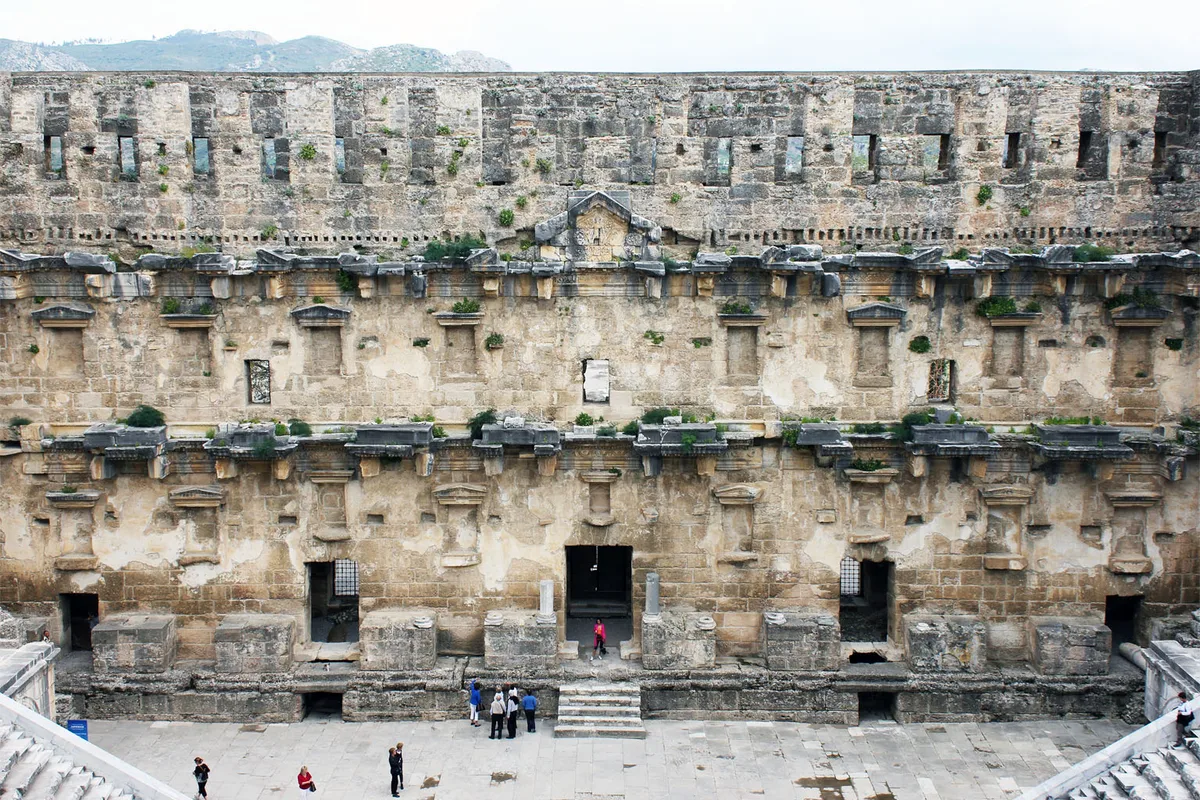
The official Go Turkiye guide identifies Aspendos and Perge as separate archaeological destinations in the Antalya region. Aspendos includes its theatre and aqueduct remains, while Perge has an extensive archaeological area. For rental planning, the important point is that each requires its own approach and time outside the car.
Choose your priority before committing to both. If one site matters most, make it the main stop and treat the second as optional. A slower visit with enough time to walk and rest can be more satisfying than arriving at two places under pressure to leave immediately.
Consider the group's appetite for walking as well as driving. Children, heat, uneven visitor surfaces and different interests can change the pace. A driver who is comfortable with a long route may still be travelling with someone who prefers one substantial stop and a straightforward return.
Use the Side Rent a Car overview to choose the rental period around that decision. A single-site outing and a two-site day can need different collection times and return margins. Avoid selecting the shortest booking first and then squeezing the itinerary into it.
Build the route from your actual hotel
Start with the full hotel address in Side or its surrounding resort area. A route calculated from the historic peninsula may not represent a hotel in Kumkoy, Evrenseki or Colakli. Add the current visitor approach for each destination, not a general place label or an administrative contact address.
Perge lies east of Antalya, and both destinations are part of the wider regional excursion choice described by Go Turkiye. That geographic information does not supply an exact driving duration from your hotel. Use current navigation for each leg and inspect the proposed roads before departure.
Compare both possible orders using the day's visitor access information and your priorities. The route with the shorter first leg is not automatically the better itinerary if it leaves your preferred stop until late or creates an awkward final return. Choose an order you can simplify if the day runs slowly.
This page does not publish unsupported distances, opening hours or entrance prices. Keep a route note containing the outward leg, the journey between sites, the final return and any fuel stop. Add a separate allowance for finding parking and walking to each entrance.
| Plan | Useful when | Main constraint |
|---|---|---|
| Aspendos only | The theatre area is your priority | Confirm the current visitor approach |
| Perge only | You prefer one substantial archaeological visit | Allow sufficient time on foot |
| Both sites | The group wants a longer regional day | Separate parking, entry and walking at each |
| One fixed, one optional | You want flexibility | Decide when to drop the optional stop |
Calculate the day in blocks rather than one drive time
Break the day into collection, outward driving, parking, first visit, onward driving, second visit, return driving, refuelling and handover. The navigation app usually helps with only the driving blocks. Leaving the other tasks invisible is the easiest way to underestimate the day.
Choose a comfortable latest departure time from the final site based on your rental return commitment. Work backwards from the agreed handover, including fuel and traffic margin. This is more useful than making a vague promise to leave when you feel finished.
If collecting the car on the same morning, allow for document checks and inspection before your planned road departure. A delivery appointment is not a guarantee that the car will be ready to drive at that exact minute. Consider whether collecting the previous day would be worth the additional cost and parking requirement.
Write down a latest comfortable departure from each stop rather than only an intended arrival. This gives the group a shared way to decide whether the second site still fits. Ask the supplier what to do if an unexpected road delay threatens the return, but do not treat that contact as a pre-approved extension. Download or save the essential route details before leaving the hotel, and keep enough phone power for both navigation and the return meeting. A route that is easy to follow outward still needs a clear final destination once the sightseeing is over.
A hypothetical couple may choose one site in depth and return comfortably for an evening meal. Another group may prefer both and reserve a longer rental period. The point of these scenarios is to match the booking to the pace, not to promise that every two-site route fits a fixed number of hours.
Use a car when independence has real value
A rental is useful when you want to set your own departure, decide how long to remain and carry the items your group needs. It can also make a combined itinerary easier to organise than arranging separate transport between destinations. Those benefits are strongest when all drivers and passengers are comfortable with the plan.
Compare arranged transport if you would prefer someone else to handle the driving and parking. Ask what the arrangement includes, how much time is available at each stop and whether the return is fixed. Do not compare a bare rental rate with a transport quote that includes several additional services.
For a party already renting during its Side stay, the excursion may be an efficient use of an existing booking. For someone renting solely for this day, collection and return effort form a larger part of the decision. Include those tasks when assessing value.
The guide to economical Side rentals explains how to compare the complete cost. Vrenty Car does not assume independent driving is always the cheapest option. It is a good choice when the flexibility, passenger needs and total arrangement justify it.
Select a comfortable car without inventing a terrain need
Choose a car that suits the passengers and the permitted public-road route. These visits do not by themselves establish a need for an SUV or off-road vehicle. Localrent's documented Turkey conditions restrict rentals to paved public roads regardless of the vehicle's appearance.
On a longer excursion, comfortable seating and working air conditioning may matter more than a larger exterior. Check room for child restraints and day bags, and keep luggage from obstructing the cabin. If you will also carry airport suitcases, evaluate that separate load rather than assuming an excursion-sized car will suffice.
Automatic transmission can be helpful if it is your preference, but confirm it in the actual offer. Ask the representative to demonstrate unfamiliar controls before leaving. If another traveller will share the driving, arrange an additional driver in advance and check that person's eligibility.
The automatic car selection guide covers practical space and equipment checks. For this route, choose a vehicle the driver can manage confidently after several hours of walking. A tiring day is not the ideal setting to learn an unnecessarily large or unfamiliar car.
Check the booking conditions against the whole route
Review the mileage allowance using every driving leg and a realistic margin for detours. Do not check only Side to the first destination. Ask how any allowance applies across the rental period and what happens if it is exceeded.
Read the security and protection terms before selecting a price. A no-deposit label does not establish zero excess or cover for every component. Wheels, underbody, windscreen and interior are among the exclusions identified in the standard Turkey conditions, so the condition of those areas deserves attention at pickup.
Keep the car within Turkey and on permitted paved public roads under the documented restrictions. If a map proposes an unpaved shortcut or a visitor approach that conflicts with the agreement, use a suitable alternative. The scenic appeal of a route is not permission to take it.
Keep the supplier's incident and breakdown contact available offline as well as on your phone. If a problem occurs, follow the reporting instructions and ask before arranging repairs. The rental insurance guide explains why a well-planned route still needs an incident procedure.
Treat parking and entry as separate decisions at each site
Use the current signed visitor entrance and parking approach at Aspendos and Perge. The tourism source confirms the destinations, not current parking capacity, fees or a drive-through route inside the archaeological areas. Plan to leave the car and continue on foot where directed.
Before leaving the vehicle, read parking conditions and check how payment works. Keep any ticket or receipt and save the location. If a car park is full or an approach is closed, choose a permitted alternative rather than following other vehicles onto uncertain ground.
Ask the questions that matter to your group before travelling: current visitor access, the relevant entrance, walking demands and any facility essential to the visit. A general destination description is not proof that every service is operating on the day.
The Side parking guide gives a repeatable method for reading signs and allowing walking time. Apply the same method at both sites. A short distance on the map between a parking pin and a monument can still require more time than expected once passengers and the actual path are considered.
Make the optional stop genuinely optional
Set a decision point before you leave the first destination. Check the remaining time, the group's energy and the current route to the second. If visiting it would consume your return margin, leave it for another day rather than treating the original list as an obligation.
Keep meal and rest arrangements flexible enough to support the day. You do not need to book every minute, but you should know where a reasonable break fits. Avoid replacing breaks with snacks in the car merely to preserve an overfull itinerary.
A hypothetical family might finish its first visit later than expected because the children need a slower pace. Dropping the second site preserves a comfortable journey back and a proper return inspection. That is a successful use of a flexible rental, not a failed itinerary.
If both destinations are essential, consider separate days or a longer booking that removes a tight same-day handover. Compare the extra rental and parking cost with the practical benefit. The right arrangement is the one that remains workable when the visit takes longer than the quickest possible schedule.
Return the car without borrowing time from the flight or evening
If returning to your hotel or another Side meeting point, agree the exact location and whether a representative will inspect the car with you. Plan the fuel stop before the final approach and return the collection fuel level under the documented policy.
Do not combine a full two-site day with a flight departure unless the actual timing leaves generous room for every stage. Airport return adds terminal selection, a supplier meeting, luggage unloading and airline procedures. A car route ending at the airport is not the same as being ready to board.
Photograph the vehicle at return, remove belongings and retain the handover record. If you need an extension, contact the supplier in advance and obtain confirmation. An itinerary change does not automatically extend the agreement.
Vrenty Car's purpose is to help you make these choices before booking. The current offer, voucher and supplier instructions govern the car; the visitor information governs the sites. Bringing those two sets of details together produces a more dependable day than relying on a single optimistic drive-time estimate.
Questions & answers
Can I visit Aspendos and Perge in one rental day?
Potentially, but assess the actual hotel, route, current visitor access and the group's walking pace. Add collection, parking, breaks and return time. This guide does not promise a fixed duration.
Which site should I visit first?
Choose according to your priority, current visitor information and the complete route back to Side. Keep the second stop optional if time or energy becomes limited.
Do I need an SUV for this excursion?
Not simply because you are visiting archaeological sites. Select a car for passenger comfort and luggage, and keep it on the permitted paved public-road approaches.
Are current entrance fees and opening times listed here?
No. The research supports the destination identities but does not verify those changing operational details. Check current official visitor information before travel.
What is the biggest rental-planning mistake?
Comparing only the driving time with the rental period. Parking, walking, breaks, fuel and the handover all need their own allowance.